
The Roman Theatre in downtown Amman has become a vibrant gathering place for thousands of Jordanian football fans following the national team’s journey at the 2026 FIFA World Cup. A giant screen installed inside the historic venue has transformed the ancient monument into a unique public viewing arena, where supporters come together to celebrate and cheer for Al-Nashama.
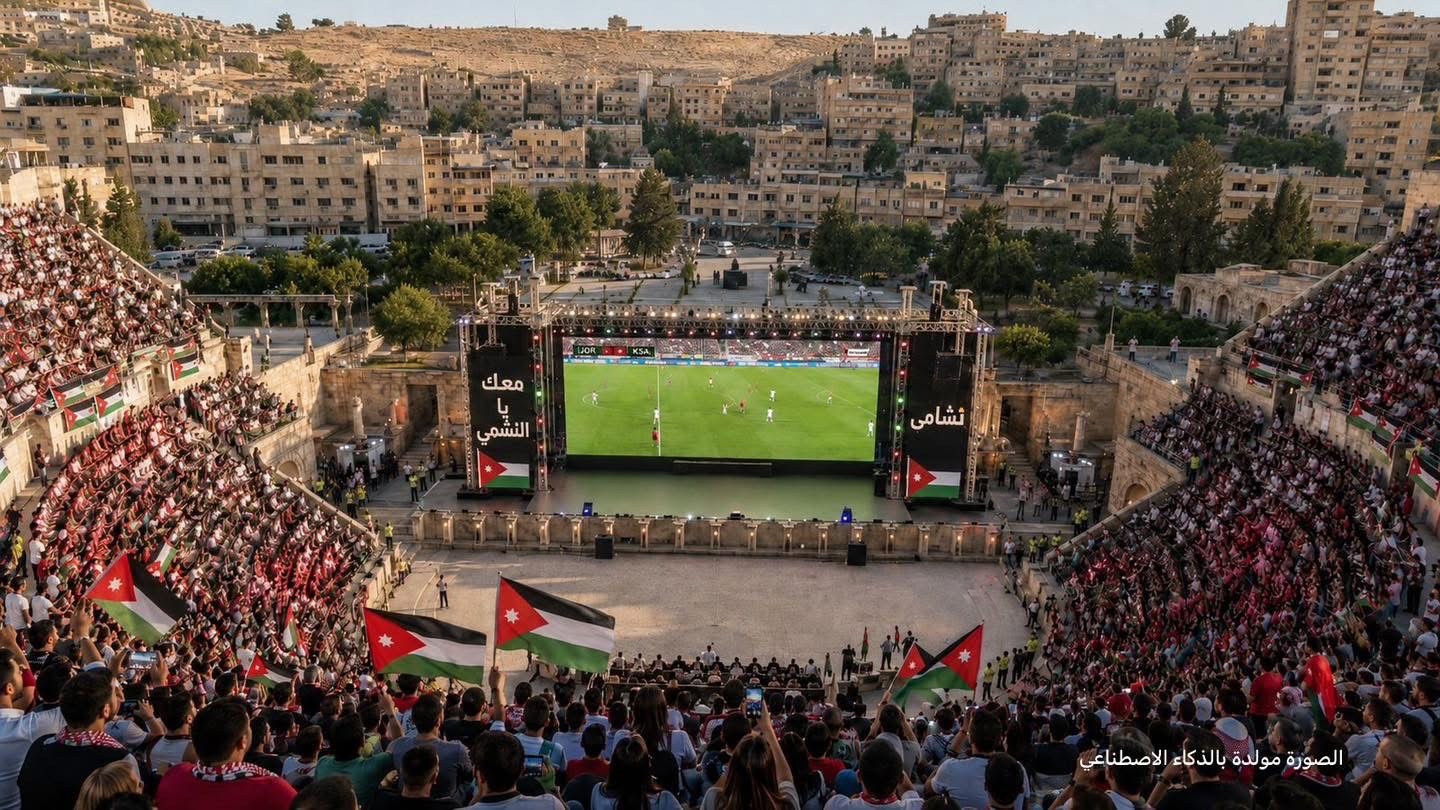
The scene is about much more than football. It is a powerful expression of national pride, bringing Jordanians together in a landmark that has stood at the heart of the city for nearly two millennia. As chants echo through the stone seating and Jordanian flags wave above the crowd, the Roman Theatre once again fulfills its original purpose as a place where people gather to share memorable experiences.
Heritage Sites as Spaces for National Celebrations
The use of the Roman Theatre for major public events highlights the importance of integrating heritage sites into contemporary life. Historic landmarks are not merely relics of the past; they are living spaces that connect communities with their cultural heritage and strengthen a sense of identity and belonging.
When thousands of Jordanians gather in an ancient monument to support their national team, they celebrate not only sport but also the enduring relationship between people, place, and history. Such events showcase Jordan’s rich heritage while introducing historic attractions to new generations of visitors and international tourists.
The Roman Theatre: An Archaeological Treasure in the Heart of Amman
The Roman Theatre is one of Jordan’s most significant archaeological and tourist attractions. Located in the historic downtown district of Amman, at the foot of Jabal Al-Jofeh and opposite the Citadel Hill, the theatre dates back to the 2nd century AD when Amman was known as Philadelphia, one of the cities of the Roman Decapolis.
Believed to have been built during the reign of Roman Emperor Antoninus Pius, the theatre is a remarkable example of Roman engineering. Carved partly into a hillside, it was designed to maximize acoustics and visibility, allowing audiences to enjoy performances from every seat.
The theatre can accommodate approximately 6,000 spectators, making it one of the largest Roman theatres in the region. Despite its age, its architectural sophistication continues to impress visitors from around the world.
A Cultural and Tourism Landmark
Today, the Roman Theatre remains one of Amman’s most dynamic cultural venues. Throughout the year, it hosts concerts, cultural festivals, traditional performances, and national celebrations, demonstrating how heritage sites can be successfully adapted for modern use while preserving their historical value.
Its location in downtown Amman places it within walking distance of several of the city’s most important attractions, including the Hashemite Plaza, traditional markets, the Nymphaeum, and the Amman Citadel. For many visitors, the theatre serves as a gateway to exploring the history and culture of Jordan’s capital.
Climbing to the upper rows rewards visitors with panoramic views of old Amman, where historic neighborhoods blend seamlessly with the modern cityscape. The experience offers a unique perspective on how the city’s ancient past continues to shape its present.
Where the Past and Present Come Together
The sight of thousands of football fans filling the Roman Theatre to support Jordan at the World Cup demonstrates the enduring relevance of historic sites in modern society. Surrounded by stones that have witnessed nearly 2,000 years of history, visitors and locals alike create new memories while celebrating a shared national passion.
In this remarkable setting, the Roman Theatre continues to serve its timeless purpose: bringing people together. Whether hosting ancient performances, cultural festivals, or World Cup celebrations, it remains one of Amman’s most iconic symbols of history, culture, and national identity.